


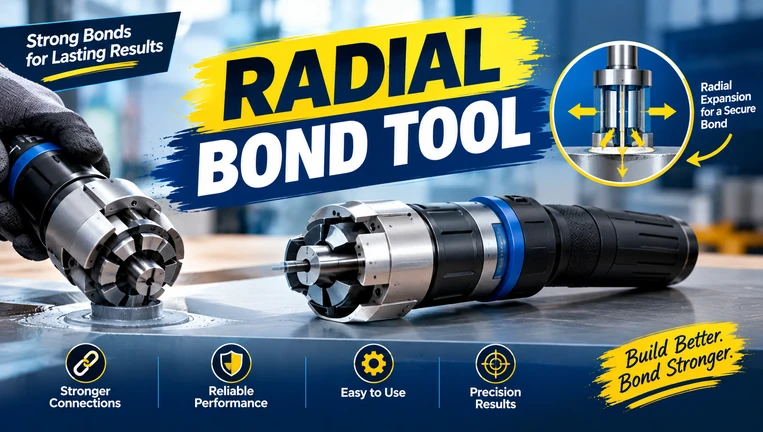
A radial bond tool is a special logging tool used in oil and gas wells. Its job is simple to say but important to do. It checks how well cement sticks to the steel pipe, called casing, inside a well. If you work in energy, engineering, or just love learning about technology, this tool is worth knowing.
In this guide, we explain the radial bond tool in plain words. You will learn what it is, how it works, and why it matters for well safety. We also cover its parts, its limits, and where this technology is heading.
At Quantumrun, we like to break down complex technology into easy steps. So we will keep each idea short and clear. Let us start from the beginning.
What Is a Radial Bond Tool?
A radial bond tool, often called RBT, is a wireline logging tool. It is lowered into a well on a cable. As it moves, it sends sound signals and listens to the echoes. These signals tell engineers how well the cement is bonded to the casing.
The word “radial” matters here. It means the tool looks around the full circle of the pipe, not just one side. This gives a wider and more detailed picture of the cement.
Radial Bond Tool Meaning in Simple Words
Think of a drinking straw inside a thick layer of clay. If the clay sticks well all around the straw, the straw is held tight. If there are gaps, the straw can move or leak.
A well works in a similar way. The steel casing is the straw. The cement is the clay. The radial bond tool checks if the clay holds firm on every side.
Here is the idea in short:
- The casing is the steel pipe inside the well.
- The cement is poured in the space around the pipe.
- The radial bond tool checks the quality of that cement bond.
- Good bonding means a strong and safe well.
Where the Tool Is Used in Oil and Gas Wells
This tool is used in the energy industry. It is common in oil and gas wells across the United States, such as in Texas, Oklahoma, and North Dakota. It is also used in many other parts of the world.
Teams use it at different stages of a well’s life:
- After the cement job, to check the quality of the work
- Before starting production, to confirm the well is sealed
- During repairs, to check old cement behind the casing
- Before closing a well, to confirm safe sealing
In each case, the goal is the same. They want clear proof that the cement does its job.
Many readers also search for this tool because they are students or new workers in the energy field. For them, the radial bond tool is a great example of how physics and technology work together in the real world. Sound, steel, and software all join in one simple task.
Why Cement Bond Quality Matters in a Well
Cement may look like a simple material. But in a well, it plays a very big role. Poor cement can lead to real problems, so checking it is a key step in well work.
The Role of Cement Behind the Casing
After a well is drilled, steel casing is lowered inside the hole. Then cement is pumped into the space between the casing and the rock. When it hardens, it does several jobs.
- It holds the casing in place.
- It blocks fluids from moving between rock layers.
- It protects the casing from harsh underground fluids.
- It helps keep the well stable and safe.
The second job is called zone isolation. It means each underground layer stays separate. Oil, gas, and water should not mix or travel where they should not go.
Risks of a Poor Cement Bond
If the cement bond is weak, fluids may move through gaps. Experts call these gaps channels. A channel can let gas or liquid flow along the outside of the pipe.
Possible problems include:
- Leaks between underground layers
- Pressure building up where it should not
- Damage to the casing over time
- Water entering the wrong zone
- Safety and environmental risks
Think about a long well that reaches deep underground. Many rock layers sit along its path. Some hold oil, some hold gas, and some hold fresh water. Cement is the wall that keeps each layer in its own place. If that wall has cracks, the layers can start to mix.
For this reason, teams do not guess. They measure. A radial bond tool gives them data they can trust before they move to the next step.
How a Radial Bond Tool Works
The radial bond tool uses sound waves. This method is called acoustic logging. Sound travels differently through steel, cement, and fluid. By studying how the sound changes, the tool can tell if the cement is tight or loose.
Sound Waves, Transmitters, and Receivers
The tool has a transmitter and receivers. The transmitter sends out a sound pulse. The pulse travels through the fluid in the well and hits the casing. It then moves along the casing and back to the receivers.
Here is what happens next:
- The transmitter sends a short sound pulse.
- The sound travels along the casing wall.
- Receivers pick up the returning signal.
- The tool records the strength and timing of the signal.
The strength of the signal is the key clue. It tells us what is around the pipe.
Reading Signals From the Casing and Cement
When the casing is free, with no cement holding it, the sound rings strongly. The signal looks loud. This is like tapping an empty metal pipe.
When cement is bonded well, the cement takes in much of the sound energy. The signal becomes weaker. This is like tapping a pipe that is held firmly inside concrete.
So engineers read the signals like this:
- Strong signal often points to weak or missing cement bond.
- Weak signal often points to a good cement bond.
- Mixed signals can point to partial bonding.
A radial tool adds one more step. It checks many sections around the pipe. This helps find channels that may be hiding on just one side.
Why does this matter? A well is not always perfectly straight. Cement may fill one side of the pipe well and leave a gap on the other side. A single reading could miss that gap. Radial readings catch it, because each sector reports on its own.
Main Parts of a Radial Bond Tool
A radial bond tool is a mix of simple mechanics and smart electronics. Each part has a clear job. Exact designs vary by maker, so always read the official technical sheet for a given model.
Sonic Transmitter and Receivers
The transmitter makes the sound pulse. The receivers sit at set distances from it. Each receiver listens for the signal at a different spot.
These distances matter. A nearer receiver is used to measure signal strength along the casing. A farther receiver helps build a fuller picture of what is going on beyond the casing. Together they give richer data than one receiver alone.
Sectors, Sensors, and Electronics
Radial tools use sensors that cover different sectors around the pipe. Think of a pie cut into slices. Each slice shows what is happening in one section of the circle.
The electronics inside the tool do several tasks:
- Control the timing of the sound pulse
- Collect the returning signals
- Convert signals into digital data
- Send data up the cable to the surface
At the surface, a logging unit and software receive the data and display it for the team. This happens in real time, so engineers can watch the log as the tool moves.
Centralizers and Tool Positioning
A radial bond tool must sit in the middle of the casing. If the tool leans to one side, the readings can be wrong. To prevent this, centralizers are used.
Centralizers are arms or springs that hold the tool in the center. Good centering gives clean and trusted data. Poor centering can make a good bond look bad, or the other way around.
That is why teams always check the tool position and setup before a run.
The tool body is also built to handle hard conditions. Wells can be hot, deep, and under high pressure. So the housing of the tool is made strong, and the electronics are protected inside. This lets the tool work in tough places and still send back clear data.
What a Radial Bond Tool Measures
The tool collects different kinds of data. Each type helps tell a part of the story.
Cement Bond Log and Variable Density Display
Two common outputs are the cement bond log, also called CBL, and the variable density log, also called VDL.
The CBL shows the strength of the casing signal. It is often drawn as a line along the depth of the well. Low values often point to better bonding.
The VDL shows the full wave pattern in a visual strip. Different shades show signal strength over time. Experts read it to learn about the bond with the casing and with the rock.
In simple words:
- CBL gives a quick view of casing bond.
- VDL gives more detail about the cement and rock.
- Together they give a stronger result than either one alone.
Radial Coverage and Channel Detection
The radial part of the tool adds a new layer of value. By checking many sectors around the pipe, the tool shows how the bond changes from one side to the other.
This helps teams spot channels. A channel is a narrow path that has no cement bond. It may look small, but it can be a big risk.
With radial data, teams can learn:
- Whether the bond is even all the way around
- Where weak spots are located
- Which depth zones need extra attention
This detail helps teams decide if a zone is safe or if repair work is needed.
How a Logging Run Is Done Step by Step
A logging run is a planned job. It follows a clear order. Here is a simple view of the process.
Preparing the Well and the Tool
Before the job begins, the crew checks the tool and the equipment. They test the electronics, check the cable, and confirm that the centralizers are ready.
They also check the well conditions. Cement needs time to harden before it is logged. Logging too early can give poor results, since the cement may not have set fully.
Key checks before a run include:
- The cement has had enough time to cure.
- The well fluid is known and recorded.
- The casing size and weight are confirmed.
- The tool is calibrated and tested.
Good preparation saves time and prevents bad data.
Safety is part of the plan as well. Wireline jobs involve heavy gear, cables, and pressure. Crews follow clear safety steps, hold short meetings before the job, and use the right protective gear. A calm and careful team is just as important as a good tool.
Running the Tool and Collecting Data
Once ready, the tool is lowered into the well on a wireline. Usually it goes down to the bottom and is then pulled up slowly. As it moves up, it records data at each depth.
The crew watches the live data on screen. They look for odd spikes, missing signals, or sudden changes. If something looks strange, they can stop and check the tool.
A steady speed helps. Moving too fast can lower the quality of the data. Moving at the right speed gives a smooth and clear log.
Reading and Checking the Results
After the run, experts study the log. They compare the readings to known patterns for the casing, cement, and well fluid. They also check quality marks, such as signal timing and tool position.
A good review answers questions like:
- Is the bond strong in the zones that must be sealed?
- Are there any channels or gaps?
- Do the readings match what the team expected?
- Is more work needed before moving ahead?
If the log shows a problem, the team can plan a fix. This may include repair cementing or other steps. The key point is that the decision comes from real data.
Radial Bond Tool vs Other Cement Evaluation Tools
There are several tools used to check cement. Each has strong points. The best choice depends on the well and the goal.
Radial Bond Tool vs Conventional CBL
A conventional CBL tool measures the bond signal in a more general way. It gives a good overview of the casing bond, but it does not show detail around the pipe in the same way.
A radial bond tool adds sector data. This extra detail helps spot channels that a simple CBL might miss. It gives a more complete view around the full circle of the casing.
In short:
- Conventional CBL is simple and widely used.
- Radial bond tools add detail around the pipe.
- Both can be run together in many setups.
Radial Bond Tool vs Ultrasonic Imaging Tools
Ultrasonic tools use higher frequency sound to create detailed images of the casing and cement. They can show fine details, such as small channels or casing shape.
Radial bond tools use lower frequency sound and often give broader and strong readings, especially useful in many standard jobs. Some wells need both types of data for a full picture.
Teams often choose based on:
- Casing size and condition
- Type of cement used
- Well fluid and conditions
- The level of detail needed
There is no single winner. Each tool fills a different need, and good teams pick the right one for the job.
A useful way to think about it is this. One tool gives a wide view, and another gives a close view. When a team needs to be very sure about a critical zone, they may use both and compare the results. Two views that agree give much more confidence than one alone.
Key Benefits of Using a Radial Bond Tool
Why do teams use this tool? Because it brings clear value to safety and planning. Here are the main benefits.
Better Well Safety and Zone Isolation
The most important benefit is safety. A well with a strong cement bond keeps fluids in the right place. This lowers the risk of leaks and unwanted flow.
Strong zone isolation also protects the environment. It helps keep underground water layers safe and separate from oil and gas zones.
A radial bond tool helps confirm this seal. It does not fix the problem, but it shows whether a problem exists.
Smarter Decisions for Operators and Engineers
Good data leads to good decisions. With a clear log, a team can decide when to move ahead and when to repair first.
Benefits for teams include:
- Less guessing about cement quality
- Faster decisions on next steps
- Better records for future work
- More trust between teams and partners
Clear records are valuable. Years later, a new team can look at the old log and understand the state of the well.
Rules also play a part. In the USA, wells must meet safety and environmental standards. Good cement logs can support these checks by showing that the well was built and sealed with care. This helps companies show that they take safety seriously.
Limits and Common Challenges
No tool is perfect. A radial bond tool has limits, and knowing them helps you read the data in a fair way.
Factors That Can Affect the Readings
Many things can change the readings. Here are some common ones.
- Tool centering: A tool that is off center can change the signal.
- Cement type: Some light cements give weaker signals even when bonded well.
- Well fluid: Gas or heavy fluid can change how sound travels.
- Cement timing: Logging before the cement fully sets can mislead readers.
- Small gaps: A tiny gap between casing and cement, called a microannulus, can make a good bond look weak.
Because of these factors, experts never read a log in a rush. They look at the full setup and compare it with the well history.
Another point to remember is that a log shows the bond at the time of the run. Wells change over time. Pressure, heat, and use can affect the cement. So a good log today is a strong sign, but teams may still check again later in the life of the well.
Tips for Better Data Quality
A few good habits help improve results.
- Check the tool setup before each run.
- Keep the tool well centered.
- Record the well fluid and cement details.
- Wait for the right time after cementing.
- Log at a steady speed.
- Compare more than one reading when needed.
Quality data starts with careful work in the field. Even the best tool cannot fix a poor setup.
Technology Trends in Cement Evaluation
Well integrity is a growing field. New tools, software, and data methods are changing how teams check cement and casing.
Digital Data, Software, and Remote Review
Today, log data is digital. It can be sent from the field to experts in another city in minutes. This lets specialists review a job from an office instead of traveling to the site.
Software also helps in many ways:
- It cleans and sorts raw data.
- It draws clear charts and images.
- It flags unusual patterns.
- It stores records for future use.
This makes the work faster and more consistent. Teams can compare logs from many wells and learn from the pattern.
Where Well Integrity Tech Is Heading
The future of this field looks smart and data driven. Many companies are exploring machine learning to help read logs. These tools can spot patterns faster than the human eye and give experts a strong starting point.
Other trends include:
- Better sensors that capture more detail
- Cloud platforms for sharing and storing logs
- Automated reports for quick review
- More focus on long term well safety
Even so, human experts remain key. Software supports their judgment. It does not replace it.
For young engineers and tech fans, this field offers many chances to learn. It mixes sensors, data, software, and field work. Anyone who enjoys problem solving can find something exciting in well integrity technology, and the demand for clear and safe methods will keep growing.
If you enjoy learning about how technology shapes industries like this one, you can find more simple guides on Quantumrun.
Conclusion
The radial bond tool is a smart and useful piece of technology. It uses sound waves to check how well cement is bonded to the casing in a well. By looking around the full circle of the pipe, it helps find weak spots that other tools may miss.
Good cement bonding keeps wells safe and sealed. It protects workers, the environment, and the long life of the well. A radial bond tool gives teams the clear data they need to make the right choice.
Remember that no tool works alone. Good setup, careful reading, and expert review all matter. For exact specs of any model, always check the official technical sheet from the maker.
Thank you for reading this guide on Quantumrun. We hope it made the radial bond tool easy to understand. Visit Quantumrun again for more simple tech guides and ideas.
Frequently Asked Questions
What is a radial bond tool?
A radial bond tool is a wireline logging tool used in wells. It uses sound waves to check how well cement sticks to the casing. It looks around the full circle of the pipe.
How does a radial bond tool work?
It sends a sound pulse and listens to the returning signal. A strong signal often means weak bonding. A weak signal often means the cement is bonded well.
What does RBT stand for in well logging?
RBT stands for radial bond tool. It is used in cement evaluation jobs. Some makers also use similar names for related sector style tools.
Why is cement bond logging important?
Cement keeps underground layers separate and holds the casing in place. A poor bond can cause leaks and safety risks. Logging shows if the cement is doing its job.
Is a radial bond tool the same as a CBL tool?
They are closely related but not the same. A CBL gives a general bond reading. A radial tool adds sector data around the pipe for more detail.
